The Developer's Current Answer
Two parts of that wording should remain intact. "No plans" describes the team's stated plan, not an immutable technical limitation; "at this time" leaves open the possibility that policy could be revised.
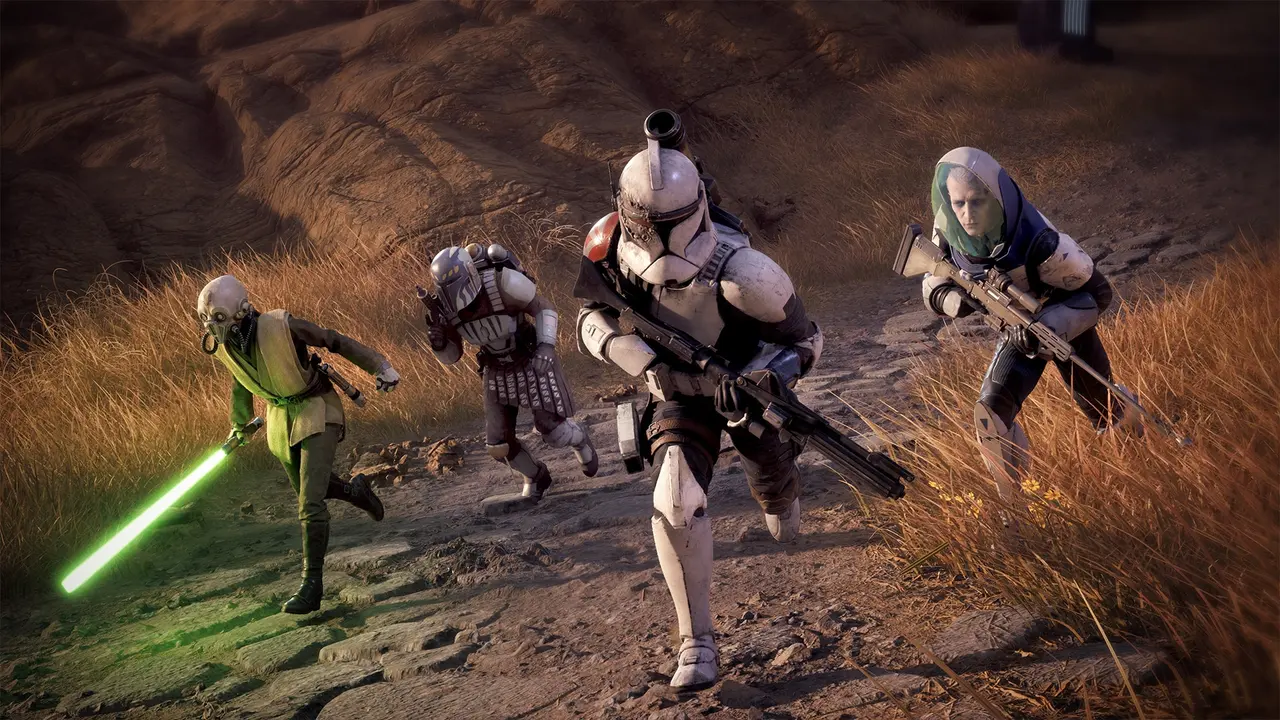
The squad image beside the answer shows four operatives running uphill through rock and dry grass, led visually by a central clone and flanked by a green lightsaber user and rifle carriers. It communicates a combat team, but contains no currency balance, storefront tile, price, purchase button, battle-pass track, loot box, or terms notice. The developer's written Q&A—not the absence of shop UI in this scene—supports the answer.
Editions and Bonuses Are Separate Purchases
Those offers establish that buyers can pay different upfront amounts for editions and receive specified cosmetic content. They do not contradict the Q&A merely because money and cosmetics are involved.
A microtransaction claim normally concerns an additional in-product or post-purchase transaction system. None should be invented from the fact that a Deluxe SKU has extra cosmetics.
The distinction matters for comparison tables. Edition price and included items belong under the exact storefront SKU; preorder eligibility belongs under its dated offer terms; the Q&A answer belongs under the current monetization plan. Combining them into a vague "paid cosmetics" label would hide whether the reader is looking at an edition, entitlement, or in-game purchase.
What Could Change This Status
Any update should record the publication date and the exact product involved rather than silently replacing the historical statement.
DLC is also a separate question. In the same Q&A, the team says it is focused on launch and has nothing to announce about DLC or post-launch content. That is not permission to claim DLC is banned, nor does hypothetical DLC automatically imply a microtransaction currency.