
Quick take
- Early campaign: Kabb (Assault), Trick (Soldier), Jae (Scout), and Hawks (Sharpshooter).
- After Tel-Rea joins: Kabb (Assault/Soldier), Tel-Rea (Padawan/Wayseeker), Jae (Scout/Gunslinger), and Hawks (Sharpshooter/Scoundrel).
- When Jae is unavailable: Kabb, Tel-Rea, Hawks (Scout/Gunslinger), and Luco (Sharpshooter/Scoundrel).
Early Game: Kabb, Trick, Jae, and Hawks
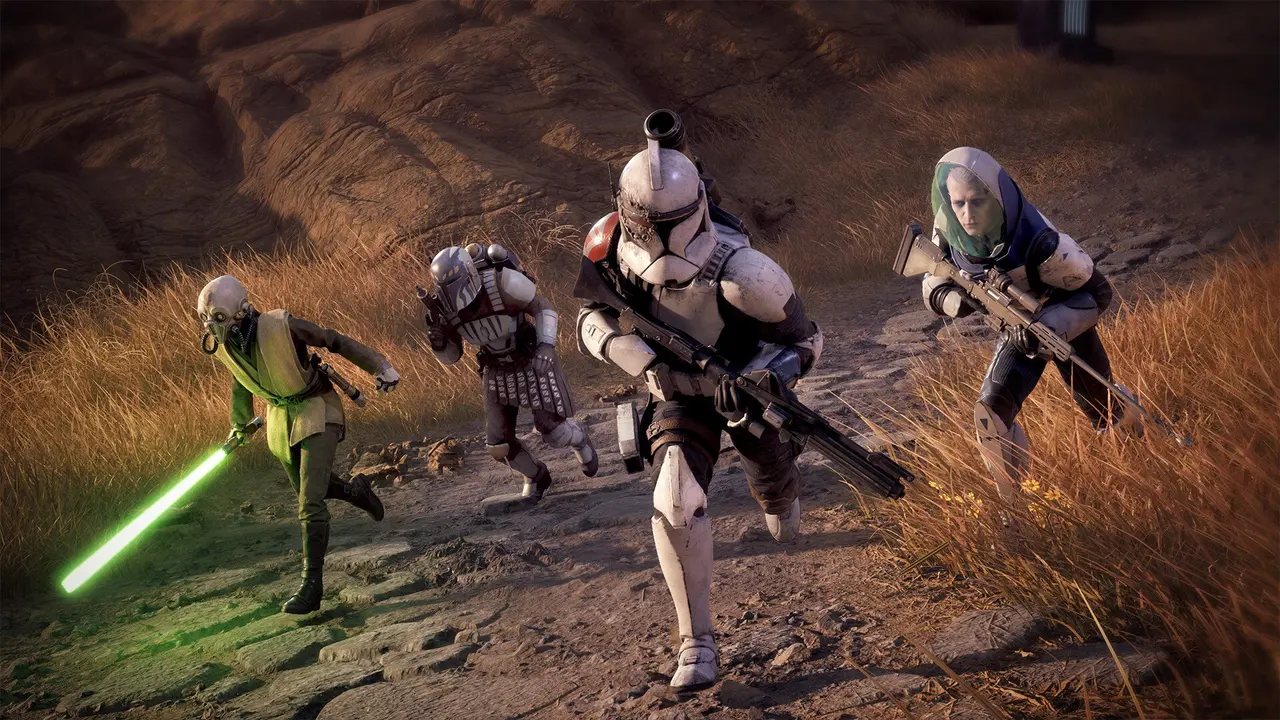
The most useful early campaign lineup is Kabb as Assault, Trick as Soldier, Jae as Scout, and Hawks as Sharpshooter.
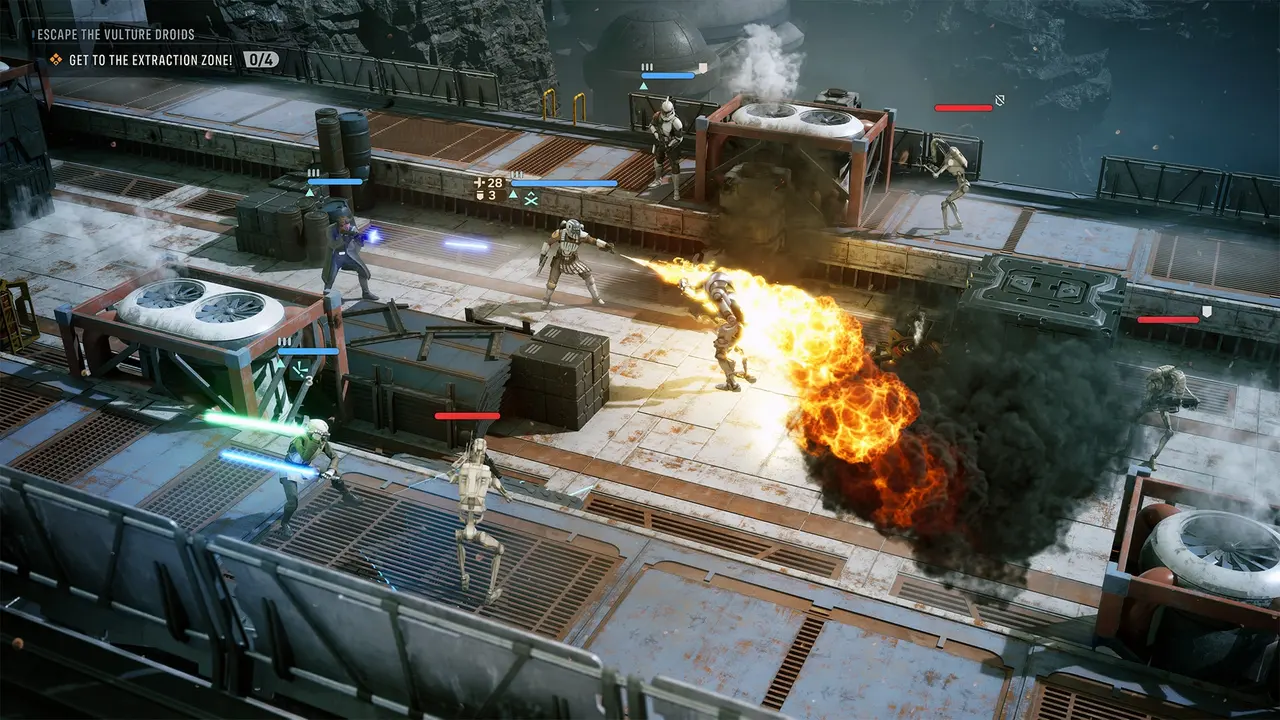
Kabb is the front-line pressure piece. The reported Assault setup uses his Uppercut kill to refund the action points spent when the target falls, so begin by asking whether the target can be finished safely rather than charging for damage alone. Trick fills the early Soldier slot with a more direct damage plan and a way to punish grouped enemies when the map gives him a clean lane. Keep both close enough to contest objectives without blocking Hawks' firing angles.
Jae works from the middle of the formation. Her Scout tools can build Advantage and help the team identify targets, while Hawks stays behind cover as Sharpshooter and converts the opening into reliable follow-up. Hawks also brings the Fearless Leader talent in the published Operator profile, so the lineup gains value from keeping him alive and within the squad's working space. If an encounter repeatedly defeats this core, change the slot causing the failure instead of assuming the entire lineup is wrong.
After Tel-Rea Joins: Add the Padawan Core
Once Tel-Rea is available, the strongest reported upgrade is Kabb as Assault/Soldier, Tel-Rea as Padawan/Wayseeker, Jae as Scout/Gunslinger, and Hawks as Sharpshooter/Scoundrel. Tel-Rea replaces the early Soldier slot with a Jedi role that brings a different kind of reach and control.
Do not read the secondary-specialization version as four roles that must be copied blindly. Kabb's Soldier package makes the melee plan more reliable when the player can secure his finisher. Tel-Rea's Wayseeker tools add displacement and a powerful Force option, but the team still needs Jae to create resources and Hawks to preserve a useful firing lane. The point of the upgrade is that each member gives the next member a better action, not that every mission has the same enemy layout.
For this lineup, start a turn by checking the target order. Jae can create the Advantage needed for a high-impact ability, Kabb can close on a target that is safe to finish, and Hawks can cover the route that enemies will use to retaliate. Tel-Rea should not be left exposed merely because the Jedi role is strong. Cover, mission objectives, and the current tooltip remain more important than a team label copied from a launch-week article.
Choose the Fourth Slot by Mission Pressure
The fourth slot should answer the mission's biggest threat. Keep Trick when the campaign is still opening and the team needs a straightforward damage role. Use Tel-Rea when her Force tools, displacement, or survivability create more answers than another standard specialization. Bring Luco when a long sight line and a second ranged plan matter, especially in the Jae-unavailable variant. Choose a recovery role only when injuries and failed exchanges are the problem; another attacker is not automatically an upgrade.
Before launching, name the job that is missing: open space, generate Advantage, protect the backline, finish exposed targets, recover from a mistake, or interact with the objective. Then check that the chosen Operator can perform that job with the current specialization and equipment. This avoids a common squad-building trap in which every member wants the same cover, the same target, or the same resource. A strong lineup has overlapping safety plans without four copies of one action.
Together they support a role-first guide, not a permanent best-character hierarchy. Keep the composition if it makes the next decision easier; change the slot if the mission exposes a repeatable gap. Note the platform, patch, and objective when a result is surprising so a later update can separate balance changes from a different encounter.
Retest the Lineup After Patches or Unlocks
A squad recommendation should survive a simple retest. Run the same kind of encounter with the same objective, keep equipment assumptions stable, and change only one Operator or specialization. Record whether the change improves reach, protection, target control, recovery, or action-point efficiency. If it only feels stronger because the mission rolled an easier enemy group, do not turn that one result into a new universal tier.
When the game adds a patch or a newly unlocked ability, reread the tooltip before editing this guide. Published launch-week lists can remain useful as dated starting points, but they cannot freeze a live game's numbers. The current build decides whether a talent triggers on a kill, what an ability costs, how far a target can be displaced, and which members can select a secondary specialization. Those details belong to the player-facing interface rather than a guess in an SEO article.
The short version is simple: begin with Kabb, Jae, Hawks, and Trick; upgrade Trick to Tel-Rea when the campaign allows it; and use Luco plus a forward Hawks when Jae is unavailable. Treat those as tested examples with distinct jobs. The best Star Wars Zero Company squad composition remains the one that gives the current mission enough answers to protect the objective and finish the turn safely.
Checked references
Sources and verification
Facts on this page were checked against the following first-party material and named post-launch coverage.