
A Solo Tactics Campaign Is the Core Product
This is not a side mode attached to a multiplayer product; the solo campaign is how the game itself is presented.
The player steps into the role of Hawks, a former Republic officer who leads the company against an emerging threat.
The narrative is advertised as a cinematic original story. Tactical operations, investigations, and other missions carry that story forward rather than existing only as detached skirmishes. The product pages do not publish a chapter list or a scene-by-scene outline, which protects the answer from invented structure.
Single-player also explains the perspective of command. One player makes battlefield and campaign decisions for Hawks and the squad.
For a buyer, the confirmed proposition is therefore specific: a self-contained solo tactics campaign with a customizable leader and persistent squad context.
Missions, Investigations, and the Base
The published loop moves between an ever-shifting battlefield and a base of operations.
Operations are not the only announced activity. Investigations and other missions appear alongside the tactical battles, and Hawks develops a network of contacts and gathers information to stay ahead of enemies. That gives the solo campaign an intelligence layer without specifying every investigation interface or solution path.
Developing the base provides preparation between deployments.
Choices are presented as consequential.
The campaign rhythm suits someone who wants to pause between fights, review the roster, prepare the company, and continue an authored story at an individual pace. Session length, pause behavior during cinematics, and exact checkpoint placement remain separate usability questions.
What the Player Builds and Commands
Steam adds a range of archetypes, from scoundrels and astromechs to a Jedi, plus tactical abilities used to outmaneuver enemies. These examples establish variety without fixing the final roster count.
Operatives improve as they deploy on missions and learn to work together. Bonds can unlock combat synergies, linking relationship development to tactical performance. The description supports team composition and ability combinations; it does not publish every bond threshold, pairing rule, or final balance value.
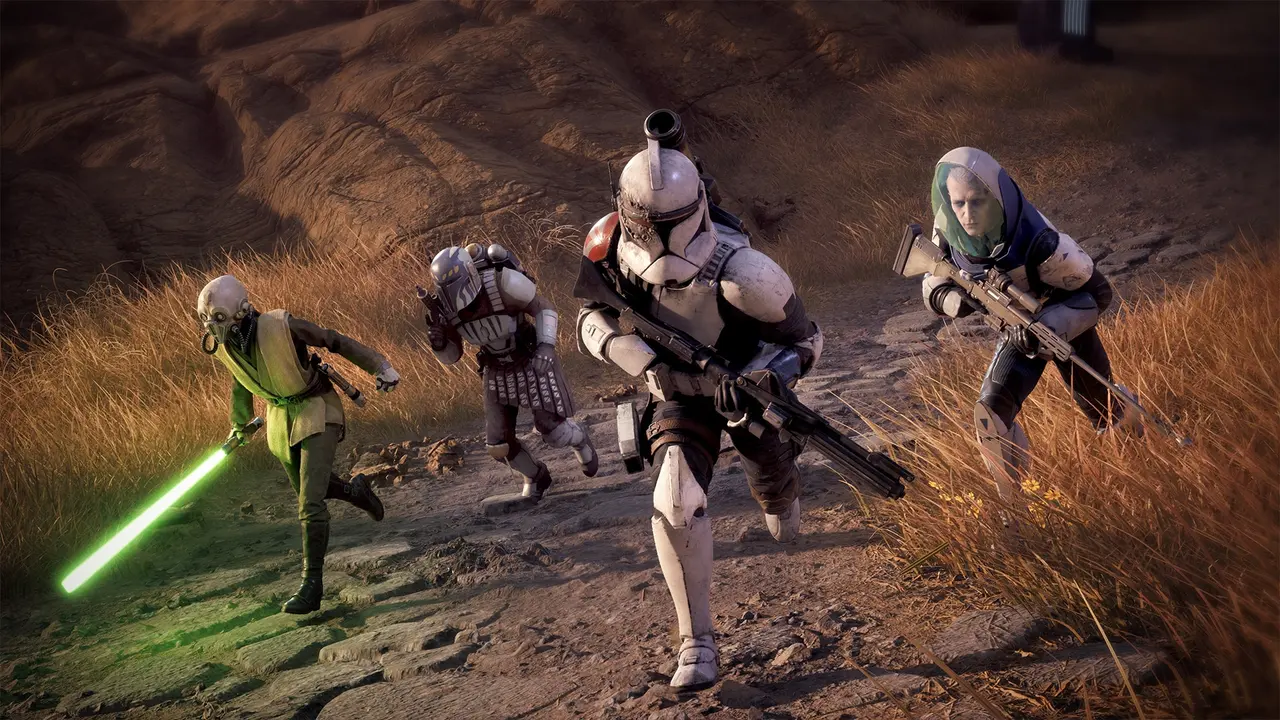
Four figures climb a rocky rise in a shallow wedge: a green-bladed character on the left, two differently armored operatives in the middle, and a pale-faced rifle carrier on the right. Their contrasting silhouettes illustrate roster diversity and coordinated movement.
That still is less useful for the campaign systems surrounding the battle. It cannot show a base upgrade, investigation choice, bond screen, save slot, mission sequence, or playthrough outcome. The image belongs beside squad command because that is the one claim its composition can directly illuminate.
What Single-Player Means in Practice
A solo campaign removes the need for another human participant to occupy a squad seat or approve campaign choices.
It is not a walkthrough of the complete strategic layer or proof of final platform performance.
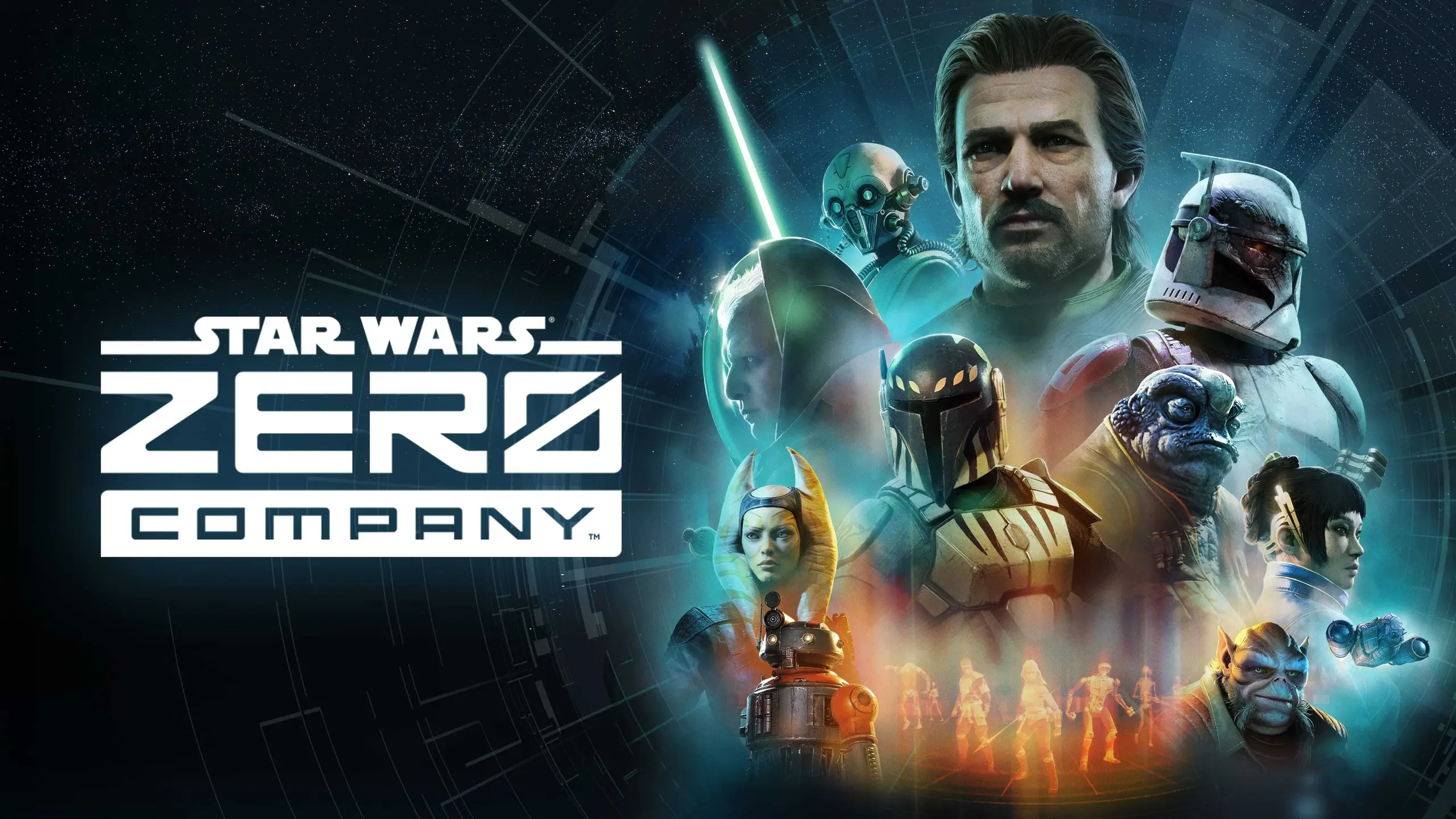
Several characters appearing in one scene should be read as the campaign ensemble. Bonds, combined attacks, dialogue, and squad deployment are systems one player manages unless a separate mode says otherwise. The multiplayer and co-op pages handle that boundary in detail; this page stays focused on the affirmative solo experience.
Single-player does not automatically mean offline.
It also does not decide accessibility or technical comfort. A genre characteristic is not a substitute for an implemented option.
Important Campaign Details Still Need Their Own Sources
Readers comparing hours to price should use the dedicated length reporting and preserve whether an estimate covers main objectives, side content, difficulty, or a particular preview build.
A statement that outcomes make playthroughs different does not define save slots, manual saves, ironman settings, chapter replay, postgame access, or a New Game Plus implementation. None of those systems should be inferred from the word playthrough or from other tactics games.
The product copy also does not settle mission repetition, late-campaign pacing, ending quality, or the proportion of authored versus variable content.
Platform-specific details remain attached to the purchased version. Hardware support, language availability, required accounts, internet conditions, cloud features, achievements, refunds, and updates can differ even though the core single-player campaign description is shared.
The accurate summary is strong without being exhaustive: Zero Company is built and marketed as a solo, story-led tactics campaign centered on Hawks, a developing squad, investigations, consequential missions, contacts, and a base. Length, saves, offline behavior, postgame structure, accessibility, and technical quality remain separate checks.
Checked references
Sources and verification
Facts on this page were checked against the following first-party material and named post-launch coverage.